
For many veterans returning home, the transition from combat to civilian life carries invisible wounds — anxiety, depression, chronic pain, and social isolation that no medal or discharge paper can address. Emotional support animals (ESAs) have emerged as one of the most effective, non-pharmaceutical tools for helping veterans manage these challenges. And while most conversations focus on PTSD, the benefits stretch far beyond it.
An emotional support animal isn’t just a pet — it’s a prescribed part of a mental health treatment plan. Licensed mental health professionals recommend ESAs for veterans who need consistent emotional regulation, behavioral anchoring, and daily structure. Dogs and cats are the most common, though any domesticated animal can qualify.
Unlike service animals, ESAs don’t require specialized task training. Their healing power lies in their consistent, non-judgmental presence — something many veterans find difficult to receive from other people.
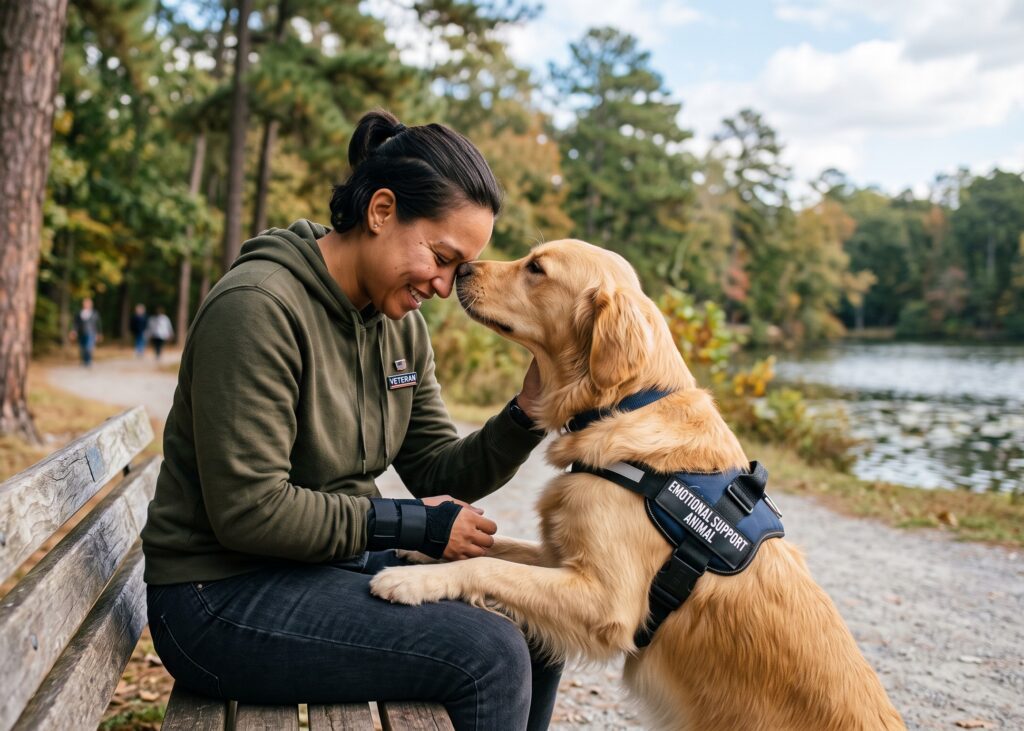
Yes, ESAs are widely recognized for helping veterans with post-traumatic stress disorder. But the emotional and physical conditions they support go much deeper:
Depression and Suicidal Ideation Veterans are at significantly higher risk of suicide than the general population. An ESA creates a daily sense of purpose and responsibility — a reason to get up, go outside, and maintain a routine. That consistent bond has shown measurable impact on reducing depressive episodes.
Traumatic Brain Injury (TBI) Many veterans live with cognitive symptoms from blast injuries — difficulty concentrating, memory lapses, mood swings. ESAs help stabilize emotional responses and reduce sensory overwhelm during difficult moments.
Chronic Pain Conditions Veterans dealing with physical injuries often develop secondary mental health struggles tied to their pain. One underdiagnosed example is intercostal neuralgia — nerve pain that runs along the rib cage, commonly caused by chest trauma, surgeries, or even prolonged tension in the thoracic region. This sharp, burning pain can severely limit mobility and worsen anxiety and depression. The calming presence of an emotional support animal has been shown to lower cortisol and reduce the psychological burden of living with chronic conditions like intercostal neuralgia, making daily pain more manageable without adding another prescription.
Moral Injury Distinct from PTSD, moral injury is the deep psychological wound that comes from actions witnessed or taken during service that conflict with one’s values. It often manifests as shame, guilt, and spiritual distress. ESAs offer a form of unconditional acceptance that can gently counter these feelings over time.
Social Anxiety and Isolation Many veterans withdraw from family and community after service. An ESA naturally encourages social interaction — walks in the park, visits to pet-friendly spaces, and even online communities of veteran ESA owners can rebuild a veteran’s social confidence gradually and safely.
The human-animal bond triggers measurable physiological changes. Interacting with an animal raises oxytocin (the bonding hormone), lowers blood pressure, and reduces cortisol levels. For veterans whose nervous systems have been conditioned for hypervigilance, an ESA essentially helps retrain the body’s stress response — not through exposure therapy or medication, but through consistent, safe, physical comfort.
Studies have found that veterans with ESAs report better sleep quality, fewer nightmares, and improved ability to self-regulate in public settings compared to those without animal support
It’s worth clarifying this distinction, because veterans often don’t know they qualify for an ESA even when they don’t meet the threshold for a trained psychiatric service dog.
Emotional Support Animal | Psychiatric Service Dog | |
Training required | None | Extensive task training |
Legal housing protection | Yes (Fair Housing Act) | Yes |
Public access rights | Limited | Full |
Prescription needed | Yes (licensed therapist) | Diagnosis + training program |
Cost | Low to moderate | Often $10,000–$30,000+ |
For veterans who can’t access or afford a fully trained service dog, an ESA can be a powerful and accessible bridge.
Getting an ESA is more straightforward than most veterans expect:
The VA has increasingly recognized ESAs as part of a holistic care approach, and many VA therapists can provide the necessary documentation.
Across veteran communities, stories of ESA impact are consistent: the dog that woke a veteran before a night terror peaked, the cat that sat through a panic attack without flinching, the rabbit that gave a combat vet their first daily routine in years. These aren’t anecdotes to be dismissed — they’re evidence of a bond that medicine is only beginning to fully quantify.
For veterans carrying wounds both visible and invisible — from PTSD to moral injury, from traumatic brain injuries to chronic conditions like intercostal neuralgia — an emotional support animal doesn’t replace treatment. It makes treatment more survivable.
The conversation around veteran mental health has expanded well beyond PTSD, and so should the tools we offer those who’ve served. Emotional support animals represent one of the most human-centered, accessible, and evidence-backed options available today — one warm body at a time.
If you’re a veteran or know one who could benefit, talk to a mental health provider about whether an ESA might be the right next step.
In the Butler, PA canine justice system, the dogs are represented by two separate yet equally important groups: The professional dog trainers, who investigate and solve the dog’s behavior problems; and the dog owners, who uphold the training knowledge taught to them.
These are their stories…
Contact us today for dog training services in Bokeelia, Bonita Springs, Cape Coral, Captiva, Estero, Fort Myers, Fort Myers Beach, Goodland, Lehigh Acres, Marco Island, Naples, North Fort Myers, Saint James City, Sanibel
Call us at (239) 788-3303